
Digital Marketing vs Traditional Marketing: Which One Matters More Today?
In today’s fast-growing business world, marketing is no longer limited to newspaper ads, flyers, or TV commercials. With the rise of the internet, a new era has begun—Digital Marketing. But does that mean Traditional Marketing is outdated? Not really. Both have their own strengths, and understanding the difference helps students and businesses make smarter decisions.
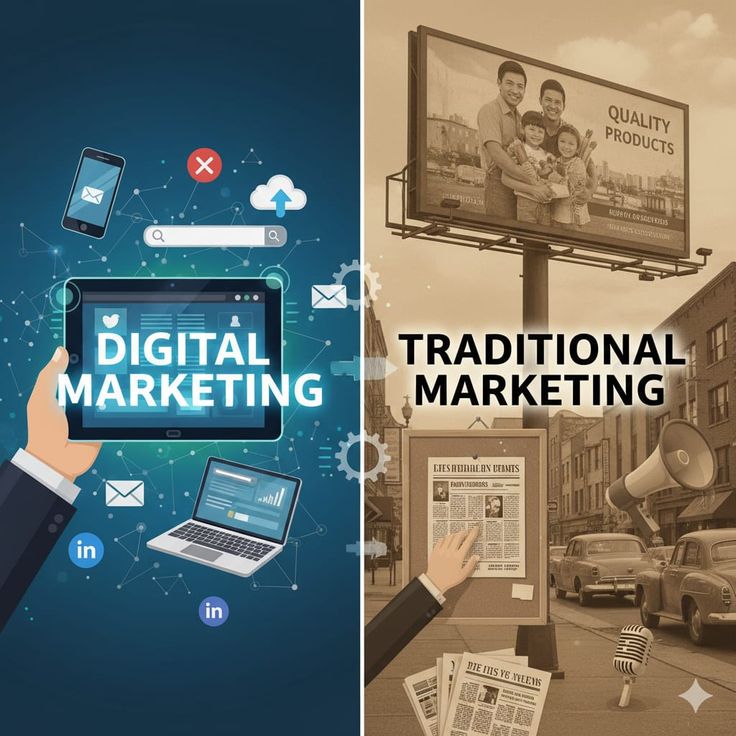
In this blog, let’s explore Digital Marketing vs Traditional Marketing, their advantages, and why digital skills are becoming essential for every career.
What Is Traditional Marketing?
Traditional marketing refers to offline promotional methods used for many decades. It focuses on reaching people through physical platforms.
Common Traditional Marketing Methods:
- Newspaper and magazine advertisements
- TV and radio commercials
- Flyers, brochures & posters
- Billboards & hoardings
- Direct mail & phone calls
- Events and trade shows
Traditional marketing is effective for local reach and brand awareness, especially for audiences who are not very active online.
What Is Digital Marketing?
Digital marketing uses the internet, digital devices, and online platforms to promote products or services. It is measurable, affordable, and allows businesses to target the right customers.
Common Digital Marketing Methods:
- Social media marketing (Facebook, Instagram, LinkedIn, YouTube)
- Search engine optimization (SEO)
- Google Ads & Meta Ads
- Email & WhatsApp marketing
- Content marketing (Blogs, Videos, Reels)
- Influencer marketing
- Website marketing & analytics
Digital marketing helps brands reach people globally with real-time tracking and cost-effective campaigns.
Key Differences: Digital Marketing vs Traditional Marketing
| Feature | Traditional Marketing | Digital Marketing |
|---|---|---|
| Platform | Offline (TV, Print, Radio) | Online (Web, Apps, Social Media) |
| Audience Targeting | Very limited | Highly targeted (age, location, interests) |
| Cost | Expensive | Budget-friendly |
| Measurement | Difficult to track | 100% measurable |
| Reach | Mostly local | Local + global |
| Interaction | One-way communication | Two-way communication (comments, messages, likes) |
| Speed | Slow | Instant results & updates |
Advantages of Traditional Marketing
✔ Reaches audiences without internet
✔ Builds strong brand credibility through print & TV
✔ More memorable for certain demographics
✔ Great for rural and offline markets
Advantages of Digital Marketing
✔ Lower cost compared to traditional ads
✔ Easy to track performance
✔ Reach exact target audience
✔ Faster results
✔ Build global visibility
✔ Allows automation using AI
✔ Perfect for startups & small businesses
Which Is Better: Digital or Traditional?
There is no “one size fits all.”
But today, as customers spend more time on social media, smartphones, and search engines, digital marketing has become essential for every business. Traditional marketing still works, but digital gives better ROI, deeper insights, and higher career opportunities.
Why Students Should Learn Digital Marketing Today
Digital marketing is one of the fastest-growing career fields in the world. From e-commerce to healthcare, every industry now depends on digital channels.
Benefits for Students & Beginners:
- No technical background required
- High-salary job opportunities
- Freelancing & remote work options
- Opportunity to start your own business or agency
- Skill demand increasing every year
Learning digital marketing helps you stay ahead of competition and opens doors to multiple career paths such as social media specialist, SEO expert, performance marketer, content creator, and more.
Final Thoughts
Both digital marketing and traditional marketing have their importance, but the future belongs to digital. Businesses, brands, and professionals who learn digital strategies now will stay competitive and relevant.
If you’re looking to build a future-ready career, now is the best time to join our BreathArt Institute, the trusted Digital Marketing Institute and upskill yourself with practical, industry-level training.